Best Blood Pressure Supplements 2026 Compared
What is the best blood pressure supplement in 2026?
There is no single winner for everyone. The best blood pressure supplement is the one whose ingredients are dosed at research-backed levels, made in a GMP facility, sold with a money-back guarantee and honest about its label. For all-in-one convenience and value we feature PressureCalm; for ingredient purists a single-ingredient product may suit better.
- Score on four things: dosing, transparency, testing and value.
- Proprietary blends hide per-ingredient amounts — treat that as a mark against.
- Our featured pick, PressureCalm, wins on convenience and guarantee, not on label transparency.
Shopping for the best blood pressure supplements in 2026 is genuinely confusing. Every bottle claims to "support healthy blood pressure," the ingredient lists overlap, and the prices swing from a few dollars to premium. This comparison cuts through it with a simple, repeatable scoring method — and it names our featured pick, PressureCalm, while being candid about the one area where it loses points. No product treats, prevents or cures anything, and none of this replaces a conversation with your clinician; what follows is a buyer's framework, not medical advice.
How we scored the best blood pressure supplements
Rather than rank on vibes, we grade every product against four criteria that actually predict whether it is worth buying.
1. Ingredient dosing. The single biggest differentiator. An ingredient only "works" at the amount studied. We look for clinically used doses: magnesium around 365 mg, CoQ10 around 200 mg, hawthorn in the 250–1200 mg range, and standardised hibiscus or bergamot. A famous ingredient at a token dose is marketing, not medicine.
2. Label transparency. Can you see the exact milligrams of each ingredient, or are they hidden inside a single "proprietary blend" total? Transparent labels let you check dosing against the research. This is the criterion most products fail, and it is where the whole exercise lives or dies — our companion piece on what a blood pressure supplement label can legally promise explains why the phrasing is so slippery.
3. Manufacturing and testing. GMP (Good Manufacturing Practice) production is the baseline. Third-party testing for identity, potency and contaminants is the gold standard, though relatively few consumer brands publish it.
4. Value and guarantee. Not sticker price — value. That means cost per day at an effective dose, plus the safety net of a money-back guarantee so a bad fit does not cost you.
| What to check | Green flag | Red flag |
|---|---|---|
| Dosing | Clinically used amounts (e.g. Mg ~365 mg, CoQ10 ~200 mg) | "Fairy-dusted" trace amounts |
| Transparency | Per-ingredient milligrams listed | One proprietary-blend total |
| Testing | GMP facility + third-party tested | No manufacturing detail at all |
| Value | Reasonable cost/day + money-back guarantee | Premium price, no guarantee |
The categories of blood pressure supplements in 2026
Broadly, the market splits into three types, and the "best" choice depends on which of these you actually want.
Single-ingredient products
A bottle of magnesium glycinate, a standardised hibiscus extract, a CoQ10 softgel. Pros: you see the exact dose, you can match it to the studies, and they are usually cheap. Cons: you may end up juggling three or four bottles to cover the ingredients you want, and adherence collapses. Best for the data-driven buyer who does not mind a routine. If magnesium is your priority, our detailed guide to the right magnesium dosage for blood pressure is the place to start.
Transparent multi-ingredient formulas
A combination product that still lists each ingredient's milligrams. Pros: convenience plus verifiability — the best of both worlds. Cons: genuinely transparent multis are rarer than you would hope, and they tend to cost more. When you find one dosing its well-studied ingredients honestly, it scores highly on our card.
Proprietary-blend formulas
A combination product that publishes one blend total (say, 620 mg across eight botanicals) without the per-ingredient split. Pros: often the most convenient and frequently the best value on a cost-per-day basis; they bundle several sensible botanicals into one habit. Cons: you cannot verify any single dose against the research. This is the category our featured pick sits in — so we score it with eyes open.
Our featured pick: PressureCalm
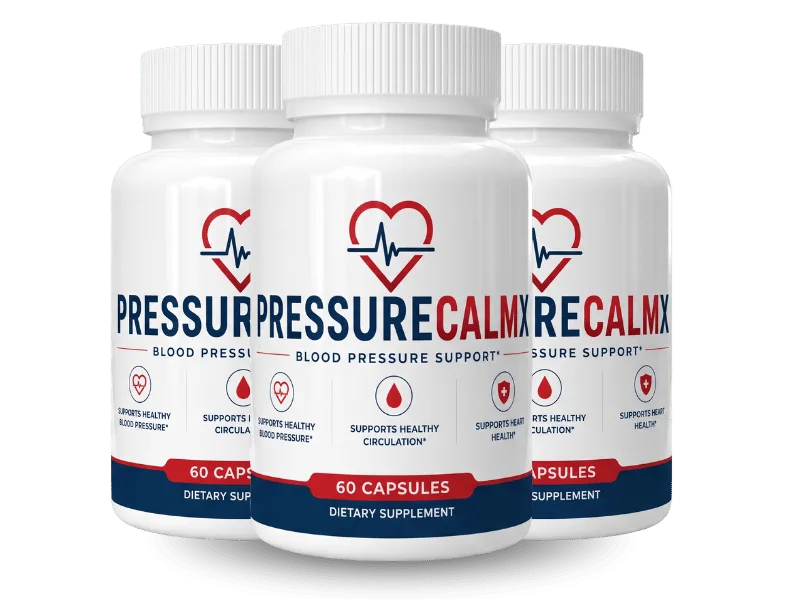
PressureCalm is our featured all-in-one pick for 2026, and we will tell you exactly why — and where it does not win. It folds eight botanicals, including hawthorn, garlic and olive leaf, into a single twice-daily capsule at 60 capsules per bottle. For the large group of people who will never sustain a four-bottle regimen, that convenience is the whole point, and adherence over eight-plus weeks is what actually determines whether any supplement does anything for you.
Where it scores well: convenience is excellent; the ingredient selection leans on genuinely studied botanicals; it is made in a GMP facility; and it ships with a 60-day money-back guarantee, which caps your downside if it is not a fit. On value, the multi-bottle tiers bring the cost per day down meaningfully.
Where it loses points — and we will not hide this: PressureCalm uses a proprietary blend. The label publishes the 620 mg total, not the milligrams of each botanical, so you cannot line hawthorn or garlic up against the doses in the research. On our transparency criterion, that is a clear deduction. If per-ingredient verifiability is your top priority, a transparent single-ingredient product will serve you better; if convenience, a sensible botanical line-up and a real guarantee matter more, PressureCalm earns the featured spot.
See how our featured pick prices out
Check today's official-store pricing and the 60-day money-back guarantee on PressureCalm's all-in-one blend before you decide.
Order NowThree buying myths to leave behind
Myth 1: "The most expensive one is the best." Price signals nothing about dose or honesty. A premium proprietary blend can be worse value than a modestly priced, transparently dosed product. Always convert to cost per day at an effective dose before you compare.
Myth 2: "A long ingredient list means a stronger product." Twenty ingredients split across a small blend total usually means each one is present in a trace amount. Four well-dosed ingredients beat twenty fairy-dusted ones every time.
Myth 3: "Combination formulas are clinically proven because the ingredients are." Individual ingredients having trials does not mean the finished blend was ever tested as a whole. Judge a multi by its ingredient selection and plausibility, not by borrowed evidence.
How to run your own comparison in five minutes
Put any two products side by side and ask, in order: Are the marquee ingredients the well-studied ones? Are they at sensible doses, or hidden in a blend? Is it GMP-made? What does it cost per day at that dose? Is there a money-back guarantee? Whichever product answers those best for your priorities is your best blood pressure supplement — the honest answer is that it is personal, not universal.
Whatever you choose, treat it as a complement. The eating pattern and the daily walk do the heavy lifting; the supplement adds its few points on top. And before you combine anything with prescription medication, take the full label to your pharmacist. When you have settled on PressureCalm specifically, our note on where to buy PressureCalm and what it costs covers the tiers and guarantee in detail.
The math of value: cost per day beats sticker price
Value is the criterion people get most wrong, because the number on the front of the bottle is not the number that matters. Convert everything to cost per day at an effective dose. A $30 bottle that lasts 15 days at the studied dose is $2.00 a day; a $49 bottle that lasts a month is $1.63. The cheaper-looking option was the pricier commitment. Multi-bottle tiers, which most official stores offer, are where combination formulas like PressureCalm become competitive — the per-day cost on a three- or six-bottle order typically drops well below the single-bottle rate, and that only makes sense anyway because these ingredients need weeks to be judged fairly.
Fold the guarantee into the same calculation. A 60-day money-back guarantee is, in effect, a free trial: if the product does not suit you, your true cost approaches zero. That safety net is worth more than a few dollars off the sticker, and it is a fair proxy for how much confidence a seller has in its own formula. A premium product with no guarantee is quietly asking you to carry all the risk.
What third-party testing does and does not tell you
Third-party testing is the criterion buyers most often overrate in one direction and underrate in another. What it genuinely verifies is identity, potency and the absence of contaminants — that the powder inside is what the label says, at the amount claimed, without heavy metals or adulterants. That is valuable, and where a brand publishes it, reward it in your scoring. What it does not do is prove the finished formula "works," because testing checks contents, not clinical outcomes. So treat published third-party results as a quality-and-safety signal, not an efficacy claim, and remember that a GMP facility is the floor every serious product should already meet. When two products are otherwise even, transparency plus published testing is the tiebreaker — and it is exactly the axis on which a proprietary blend concedes ground.
Related reading
- Supplements to lower blood pressure naturally: the evidence roundup
- PressureCalm reviews: does it really work?
- PressureCalm ingredients and possible side effects
- Where to buy PressureCalm and what it costs
Frequently asked questions
What is the best blood pressure supplement in 2026?
There is no single winner for everyone. The best blood pressure supplement is the one whose ingredients are dosed at research-backed levels, made in a GMP facility, sold with a money-back guarantee and honest about its label. For all-in-one convenience and value we feature PressureCalm; for ingredient purists a single-ingredient product may suit better.
What should I look for on a blood pressure supplement label?
Look for clinically used doses — magnesium around 365 mg, CoQ10 around 200 mg, hawthorn 250 to 1200 mg, and standardised hibiscus or bergamot. Prefer transparent per-ingredient amounts over a single proprietary-blend total, plus GMP manufacturing, third-party testing where stated, and a clear money-back guarantee.
Are expensive blood pressure supplements worth the money?
Price alone tells you little. A pricey proprietary blend can be worse value than a modestly priced, transparently dosed product. Judge value on cost per day at an effective dose, the length of the guarantee, and whether the label lets you verify what you are paying for rather than on the sticker price.
Which blood pressure supplement has the best clinical evidence?
For single ingredients, magnesium, hibiscus, hawthorn and omega-3 have the strongest randomised-trial data for supporting healthy blood pressure. Combination formulas rarely have trials of the finished product, so judge a blend by whether its individual ingredients are the well-studied ones and whether they appear at sensible amounts.
Ready to try our featured pick?
PressureCalm packs eight botanicals into one twice-daily capsule, backed by a 60-day money-back guarantee from the official store.
Order NowReferences
- Clinically used ingredient dose ranges: magnesium (~365 mg), CoQ10 (~200 mg), hawthorn (250–1200 mg), standardised hibiscus and bergamot.
- Randomised-trial evidence base for magnesium, hibiscus, hawthorn and omega-3 in supporting healthy blood pressure.
- FDA guidance on dietary supplement labelling, structure/function claims and proprietary-blend disclosure.
- Good Manufacturing Practice (GMP) standards and the role of independent third-party testing.