Fish Oil Supplements for Heart Health: The Complete Omega-3 Guide
Are fish oil supplements good for heart health?
Fish oil supplements for heart health supply omega-3 EPA and DHA, which support healthy triglyceride levels and are linked to modest blood pressure reductions of about 2 to 4 mmHg. They are supportive tools within a wider routine, not a treatment or a guarantee. Choose by EPA plus DHA content and third-party purity testing, and take them regularly.
- Omega-3s mainly help triglycerides and offer a small blood-pressure benefit over time.
- Aim for the EPA + DHA figure, not the total fish oil weight on the front of the bottle.
- Look for third-party purity testing and enteric-coated softgels to reduce fishy aftertaste.
Few supplements are as universally recommended and as widely misunderstood as fish oil. If you are weighing up fish oil supplements for heart health, you have probably seen enormous "1,400 mg" numbers on the front of the bottle and assumed bigger is better. It usually is not, and this guide explains why. We will cover what omega-3 EPA and DHA actually do for blood pressure and triglycerides, the dose that matches the research, how to judge purity so you are not paying for rancid oil, and where fish oil fits into a whole-heart routine that also takes blood pressure seriously.
The honest frame first: fish oil supports healthy triglycerides and healthy blood pressure. It does not treat, cure or prevent heart disease, and the large trials on hard outcomes have been genuinely mixed. That is not a reason to dismiss it — it is a reason to use it for what it is well suited to, at the right dose, rather than as a magic heart pill.
What omega-3s actually do for the heart
Fish oil's active ingredients are two long-chain omega-3 fatty acids: EPA (eicosapentaenoic acid) and DHA (docosahexaenoic acid). Your body cannot make them efficiently, so they come from oily fish or a supplement. Their most reliable cardiovascular effect is on triglycerides — the blood fat that rises with excess sugar, refined carbs and alcohol. At adequate intakes, omega-3s support healthy triglyceride levels, and at higher medical doses they can bring elevated triglycerides down substantially.
The second effect is on blood pressure. Across many studies, consistent omega-3 intake is associated with modest reductions in the region of 2 to 4 mmHg. That sounds small, and on its own it is — but blood pressure is a game of aggregated small wins, and a few mmHg stacked with weight, movement and sodium changes adds up. Omega-3s also support healthy blood vessel function and a normal inflammatory response, both of which matter for the cardiovascular system as a whole.
What omega-3s largely do not do is lower LDL cholesterol; they can even nudge it up slightly in some people. So if LDL is your target number, fish oil is the wrong tool and you should look instead at our roundup of evidence-led supplements to lower cholesterol. Fish oil is a triglyceride-and-blood-pressure play, and matching the tool to the number is the whole game.
How much omega-3 should you take for heart health?
This is where the front-of-bottle number misleads people. "1,000 mg fish oil" is not "1,000 mg omega-3". A typical fish oil capsule is only about 30% EPA and DHA by weight, so a big total can hide a small active dose. The figure that matters is the combined EPA plus DHA per serving, printed on the back panel.
As a rough map:
- General heart-health support: around 1,000 mg of combined EPA and DHA per day suits most adults.
- Triglyceride focus: higher intakes are sometimes used, but this is the territory for medical guidance, not guesswork.
- Dietary baseline: two servings of oily fish a week is the food-first version of the same idea.
Read the label like a detective: find "EPA + DHA" per serving, note the serving size (sometimes two or three softgels, not one), and do the arithmetic before you compare prices. A cheaper bottle that needs three capsules to reach the same EPA + DHA is not cheaper at all.
Give the blood-pressure side a dedicated blend
Fish oil offers a few mmHg; a targeted botanical blend adds to it. PressureCalmX combines garlic, olive leaf, hawthorn and more to support blood pressure already within a normal range.
See PressureCalmX PricingHow to choose fish oil supplements for heart health: quality and purity
Fish oil is fragile. It oxidises, it can concentrate contaminants from the ocean, and a rancid softgel is worse than useless. Quality is not a luxury here — it is the difference between a supplement that helps and one that adds oxidised fat to your day. Four things separate a good fish oil supplement from a cheap one.
Third-party purity testing. Independent testing for heavy metals such as mercury, plus PCBs and dioxins, is the single most important quality signal. Reputable brands publish a certificate of analysis or carry a recognised purity seal.
Freshness and oxidation. Look for oxidation markers (a low TOTOX value) where disclosed, a sensible expiry date, and antioxidants like added vitamin E. A strongly fishy smell on opening is a warning sign, not a normal feature.
Form and concentration. Triglyceride and re-esterified triglyceride forms are generally well absorbed; highly concentrated oils get you to your EPA + DHA target in fewer softgels.
Tolerability. Enteric-coated softgels resist opening until past the stomach, which cuts the fishy aftertaste and repeat that make people quit. Taking it with a meal helps too.
Three common objections about fish oil
"Didn't studies show fish oil doesn't work?" Some large outcome trials were disappointing, and that news travelled. But the picture is more nuanced: results have depended heavily on dose, the specific omega-3 used, and the population studied, with higher-dose EPA trials looking more favourable than low-dose mixed ones. The honest read is that fish oil is a supportive tool with real effects on triglycerides and blood pressure, not a proven shield against heart attacks. Use it for the former, not the latter.
"Can't I just eat fish instead?" Yes, and if you reliably eat two servings of oily fish a week, that is an excellent food-first approach that also brings protein and other nutrients. A supplement is for people who do not, or cannot, hit that consistently — convenience and a known dose, not superiority over real food.
"Are the fishy burps unavoidable?" No. The reflux and aftertaste that make people abandon fish oil are largely solved by enteric-coated capsules, taking it with food, and storing it cool so it does not oxidise. A tolerable supplement you actually keep taking beats a "better" one that lives forgotten in a cupboard.
EPA versus DHA: do they do different jobs?
Most fish oil supplements contain both EPA and DHA, but the ratio between them varies a lot between products, and people often ask whether it matters. The short answer is that both are valuable and the combined total is what you should shop on, but there are some nuances worth knowing. EPA has drawn the most attention in cardiovascular research, particularly at higher doses, where trials using concentrated EPA have looked more favourable for people with elevated triglycerides. DHA is structurally important for the brain, the eyes and cell membranes throughout the body, and it appears to carry a slight edge for supporting healthy blood pressure and vessel function.
For general heart-health support, you do not need to agonise over the split — a balanced EPA and DHA product that hits your combined target consistently is a perfectly good choice. The ratio becomes more relevant when you are chasing a specific goal under medical guidance, at which point a clinician may steer you toward a particular concentration or form. For everyone else, the practical hierarchy is simple: total EPA + DHA first, purity and freshness second, ratio a distant third. Do not let a marketing story about a magic ratio distract you from the two numbers that actually decide whether a fish oil is worth buying.
Who should be cautious with fish oil
Fish oil is generally safe, but "generally safe" is not "safe for everyone in every situation", and honesty here matters more than reassurance. The most important caution is its mild blood-thinning effect, which becomes more relevant at higher doses. If you take anticoagulant or antiplatelet medication, if you have a bleeding disorder, or if you have surgery or a dental procedure coming up, fish oil is a conversation to have with your clinician rather than a decision to make alone — sometimes it is paused in advance of a procedure.
People with a fish or shellfish allergy should approach fish oil carefully and consider an algae-based omega-3 as an alternative source of EPA and DHA. Anyone who is pregnant or breastfeeding, or managing an existing health condition, should also confirm both the product and the dose with a professional, because appropriate intakes and priorities differ. And as with every supplement on this site, fish oil is support, not treatment: it does not replace prescribed medication, and it is not a reason to skip the appointments, tests and lifestyle changes that do the heavy lifting for your heart.
Where fish oil fits in whole-heart support
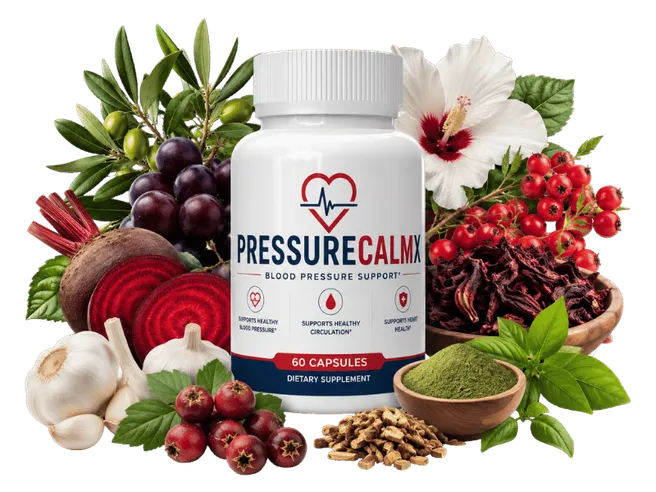
Fish oil is a strong contributor to two of the levers that matter — triglycerides and, modestly, blood pressure — but it is one contributor, not the whole strategy. That is the honest place for PressureCalmX in this article. It is a blood-pressure support blend, not a fish oil product, built around botanicals such as garlic, olive leaf, hawthorn, buchu and juniper to support blood pressure already within a normal range. Where fish oil offers a few mmHg through omega-3s, a dedicated botanical blend approaches the same goal from a different direction, and the two are complementary rather than redundant.
Neither is a treatment for high blood pressure or heart disease, and the language on both labels reflects that. If you want to see exactly how those claims are bounded, read our explainer on what a blood pressure supplement label can legally promise — it is the fastest way to become a harder supplement to oversell to. Build the diet, keep moving, take a well-chosen fish oil for the triglyceride side, support the pressure side deliberately, and re-test rather than guess. That is what a whole-heart routine actually looks like.
Related reading
Frequently asked questions
Is fish oil good for high blood pressure?
Omega-3s from fish oil can support healthy blood pressure, with consistent use associated with modest reductions of roughly 2 to 4 mmHg in studies. That is meaningful as part of a wider routine but small on its own, and it is support rather than treatment. Anyone managing high blood pressure should keep working with their clinician rather than relying on fish oil alone.
How much omega-3 should I take for heart health?
General heart-health guidance points to roughly 1,000 mg of combined EPA and DHA per day for most adults, with higher intakes sometimes used specifically for triglycerides under medical guidance. What matters is the EPA plus DHA figure on the back of the label, not the total fish oil weight on the front.
What is the best type of fish oil supplement?
The best fish oil supplement is one with a high EPA plus DHA content per serving, third-party purity testing for heavy metals and oxidation, and a form you will actually take consistently. Triglyceride and re-esterified triglyceride forms are well absorbed, and enteric-coated softgels help reduce fishy aftertaste and repeat.
Does fish oil have side effects?
The most common complaints are a fishy aftertaste, mild burping and occasional digestive upset, all of which improve with enteric-coated capsules or taking it with food. At higher doses fish oil can have a blood-thinning effect, so anyone on anticoagulants or facing surgery should clear it with a clinician first.
Support blood pressure the way fish oil supports triglycerides
Eight botanicals, one 620 mg blend, two capsules a day — with today's official-store pricing and a 60-day money-back guarantee.
Order Now